My last round of focus groups before the May elections took place in Leeds, where we heard from former Tories who had switched to Labour or Reform, and longer-standing Labour voters considering their options; and Bridgend, where those who had helped elect and re-elect Welsh Labour pondered the Senedd elections.
As in last month’s groups, most thought Keir Starmer had ended up in the right place on Britain’s involvement in the Iran crisis (“It’s quite nice to see Keir take a stand and not crumble to Trump”), though several said they wanted to see firmer opposition to the US action. People had also picked up on Lord Robertson’s warning that government complacency about defence had left Britain’s security in peril. “We’re not adequately prepared. I think with what’s going on now, we’re in a very, very weak position.” They tended to think this was more important than other apparent government priorities: “I’d rather spend more on defence than some of the stuff they are spending on. It’s too much money on benefits.”
We’ve got people stopping us from providing for our own country, when China’s spewing all that out. What good are we doing?
The groups were also worried about rising petrol and energy costs, and the knock-on effects on prices more generally. Several felt that Britain should be more self-sufficient in energy production: “It’s highlighted that we should be looking at more ways as a country to producing things ourselves rather than importing everything. Our government says we’re heading towards this net zero, but the rest of the world is accelerating so it doesn’t actually help;” “Ed Miliband’s stopping us exploring the gas we’ve got naturally. We’ve got loads of resources we could mine, but we’re not allowed. So we’ve got people stopping us from providing for our own country, when China’s spewing all that out. What good are we doing?”
Nobody was reassured by the lower energy price cap (“Energy bills are increasing. They say they’ve come down by £100, but they haven’t”). Some argued that with tax receipts rising because of the crisis, the government could afford a temporary cut in fuel levies: “If he was for the working man, which he says he is, he could knock ten or 15p off fuel duty. They’re earning a fortune. I saw it on Facebook when the Reform guy said ‘come to my petrol station and I’ll show you what a Reform government looks like. I know it’s a massive PR thing but it makes you think, actually, if he can do it, why can’t the bloody prime minister do it?”
Labour were always for the working people. But they don’t help the working people. They help the non-working people
Some argued that the country could not afford to subsidise household bills if prices continued to rise. If help was available, a few thought it should be targeted at the most vulnerable. However, there was considerable resistance to the idea that help should only go to those already on benefits: “We either all have to suck it up or you help the working-stroke-middle class;” “Maybe it should be means tested but the threshold should be higher;” “There’s got to be some kind of balance. I don’t feel it should always go to those people who are on benefits because it obviously affects a lot of different people as well.”
Many, including 2024 Labour voters, felt that under this government the balance had already tipped too far towards benefit claimants at the expense of those in work: “Labour were always for the working people. But they don’t help the working people. They help the non-working people;” “As someone with two children and wants to have a third child, it’s a big debate in our household as to whether we can afford it, and we both earn decent salaries. So to me, for someone who doesn’t work to be in a similar position when I feel like we’ve worked hard – it sticks a bit.”
In my business I can’t afford to employ more staff because the minimum wage has gone up and National Insurance has gone up and the rates have gone up
Several had picked up on the IMF downgrading their growth forecasts (“Britain got the biggest downgrade of any economy in the world”). While they accepted that the world situation was difficult, many said their daily experience told them that government policies were making things worse not better: “In my business I can’t afford to employ more staff because the minimum wage has gone up and National Insurance has gone up and the rates have gone up. So people are cutting back everywhere and prices are going up;” “I work for an accountant and just today alone I’ve had three businesses going into administration. A restaurant in Leeds and two gyms. Because they’re small and independent, with the employment changes that are coming in – it’s quite sad, it’s their living but they physically can’t afford to keep running the business.”
There was a shoplifter in Morrisons and I stuck my foot out… The police came and gave me a bollocking
The authorities’ inability or refusal to deal with shoplifting was noted as another burden on business and customers: “There was a shoplifter in Morrisons and I stuck my foot out and he went down. I got in trouble with the manager for stopping him. Then the police came and gave me a bollocking as well. They said if he’d hurt himself I could have been in trouble. So I said, if I just take my shopping now and walk out without paying, you’re not going to stop me? He was like ‘I can understand why you’re pissed off, sir’. They don’t stop you.”
He’s eloquent but it’s just wishy-washy wackiness
Thinking about the alternatives on offer, some former Labour voters (and even a couple of those who had voted Reform because they wanted change) were interested in the Green Party. There were very mixed views about Zack Polanksi (“He’s more relatable;” “He’s eloquent but it’s just wishy-washy wackiness;” “He has the potential to be incredibly dangerous”). Participants had also noticed a number of policy ideas, which also provoked debate: drug decriminalisation, trans rights, renewable energy, dislike of private cars, a maximum ten-to-one salary ratio, and banning horse racing (“He’s blotted his copybook with my mother-in-law with that one!”) The groups recognised the party’s rising profile, whether they welcomed it or not: “I think it’s going to be quite close between Reform and Green at the next election. They’re definitely getting more traction.”
It’s made me think, now we’ve seen Trump in power… The policies feel a little bit too close
Those who had voted for Reform UK tended to think the case for the party was even stronger now (“The country has been ruined by these governments that have no idea what they’re doing”). They often talked about immigration but not exclusively: North Sea oil and welfare policy were also mentioned. However, a few said the American experience had given them second thoughts: “He can be quite childish sometimes and acts just like Trump. It’s made me think, now we’ve seen Trump in power and executing what he’s doing. The policies feel a little bit too close to Trump and America.”
She doesn’t seem as bitchy as Labour seemed when the Tories were in power
Many in the groups had positive things to say about Kemi Badenoch, describing her as passionate, strong-willed, intelligent, and someone who listens: “I think she’s building, isn’t she?” “When the Tories were in, Labour’s strategy was just to pull the Tories apart. But I think she delivers it in a different way and speaks about the way she would so things. She doesn’t seem as bitchy as they seemed when the Tories were in power.” However, some were not sure that the Conservative Party as a whole had mended its ways (“Can you trust a party that can’t really choose who the leader is? They went through so many in such a short space of time”). Some also said they had learned not to have faith in political pledges, however plausible the messenger: “She delivers herself pretty well and as a person she’s quite relatable. But again, it’s what they’re promising and whether they will follow through”.
He’s good and he’s so involved, but the fact that he’s a Tory… I’m conflicted
When it came to local elections, some said (or admitted) that they would not vote or that they would use the opportunity to show what they thought about national politics. More often, they said (or claimed) that they would be thinking about local issues: their local councillor, bins, roadworks, potholes, parking charges, housing issues, town centres, or local crime and policing. Several said their vote would not necessarily reflect their usual political loyalties: “Our local guy is good and he’s so involved. You can message him and he’s approachable. But then the fact that he’s a Tory… I don’t know, I’m conflicted.”
I think this will be Wales saying what they think of Westminster and that is the problem
Most of our Welsh participants were aware of the new proportional voting system for the Senedd election, although they tended to be hazy on the details (“I haven’t read it properly, I’m not going to lie. But I know it’s different”). There were also mixed views on the decision to expand the Senedd from 60 to 96 members in order to expand scrutiny and capacity: “I don’t know whether it will make things run faster or just make it more expensive”.
While there was general disappointment with Labour’s performance nationally, many were at pains to point out that the Senedd election was separate from Westminster politics – though some worried that their compatriots would not see it that way: “Keir Starmer has got four years in the job regardless. This has nothing to do with what goes on in the Houses of Parliament. But I think this will be Wales saying what they think of Westminster and that is the problem. It’s dangerous.” Some detected cool relations between Keir Starmer and First Minister Eluned Morgan: “She won’t even talk about him, will she? To be fair, she can’t stand him.”
Former Labour voters tended to think devolution had allowed Wales to differentiate itself from England in ways they regarded as beneficial: free prescriptions, free school meals, no academy schools, different rules on private renting, heavily subsidised social care. Some also felt the different approaches to covid had heightened awareness of the Welsh Government’s powers.
The Welsh Government tends to work at a bit of a glacial pace
There were plenty of complaints, however: “20mph speed limits. There wasn’t even a consultation, was there? No, no, it was like, ‘this is what we’re doing’;” “You spend more time looking at your speedometer. You’re not concentrating on the road;” “One thing is that the Welsh Government tends to work at a bit of a glacial pace. I don’t know whether it’s funding, but it tends to be very, very slow;” “Eluned Morgan said that if they get back into power, they’re going to sort out the NHS. Well, where have they been till now?”
Another concern was that Keir Starmer and the Labour party nationally would try to exert more control over Welsh Labour, to the detriment of politics in Wales: “I think Plaid is very similar to Welsh Labour, but I don’t trust Keir Starmer not to alter Welsh Labour to be more like the national Labour party, because he has this thing of parachuting his people in and putting them on boards and picking who goes where, and I don’t trust that.”
If people want to go a different way, it’s a fairly safe bet
Despite their defence of the Welsh Government (at least in comparison to Westminster), many of our former Labour voters said they were attracted to Plaid Cymru. This was usually because of a feeling that the party had Welsh interests at heart, rather than any specific policy ideas: “I just feel that they’re more, like, for us, wanting better for Wales, that they’ll fight for what we need;” “I’ve never voted for them but I like them, and I like some of their values at the moment;” “Obviously it’s the Welshness. I think, as a nation, we’ve become a little bit more patriotic of late;” “Over the years, as we’ve seen how badly our country has been treated compared to other parts, they’ve moved to being an actual political party and they’ve gained traction.” Some felt that while Plaid would mean a change from Labour, the two parties seemed to have reassuringly similar outlooks: “To be fair, in Plaid, they’re not a million miles away from Labour’s values. As an alternative, if people want to go a different way, it’s a fairly safe bet. It would change colour essentially, but I think the mood will be very similar.”
Others were sceptical, often wondering what Plaid would be able to achieve within Wales’s funding constraints that Labour had not: “There’s only so much that Welsh Labour can do with the funding they’re given per head of population. We want change, but how much can be changed with what you’ve got? And have Plaid got the experience and the policies? It’s a gamble, isn’t it? Labour is safe;” “They promise all this Welsh nationalism, but when they talk about it they just say, oh, we’ll go and beg some more money from Westminster.”
A few were sticking with what they knew: “I’ll stay safe with Labour because I work for the NHS and I don’t think it’s in a position for anyone to have a bright idea. It’s probably the same with education. This is not the time for bright ideas”
What you vote in Wales isn’t going to affect anything in Dover
There were mixed views about Reform in Wales. Opponents thought the party’s focus on migration was irrelevant to the Senedd election: “Walking down the street listening to people it’s all ‘I’m voting Reform to stop the boats’. No it won’t. What you vote in Wales is not going to affect anything in Dover.” They also felt that Reform had no real interest in Wales: “Nigel Farage has turned up in Newport for five minutes, said we’re going to do X, Y and Z, but he couldn’t care less about Wales. He doesn’t even know anything about Wales.”
Those who were tempted to vote Reform in the Senedd election either rejected this view – saying that the Welsh Government’s policies in areas such as social housing helped to draw migrants to the country – or argued that its approach was too soft all round: “With something like social housing, if you’re not born in this country you shouldn’t be able to get it. You shouldn’t be able to claim benefits and get the house and stuff;” “New regulations were laid by the Welsh Government expanding the eligibility criteria, so refugees were entitled to assistance under the homelessness provisions in the Housing Wales Act. But would you rather have a family sleeping under a bridge?” “The only reason why I’m not thinking of Reform is that immigration is on top of the agenda. You go through Denbigh and it feels like a different country.”
They’re all dancing around Nigel
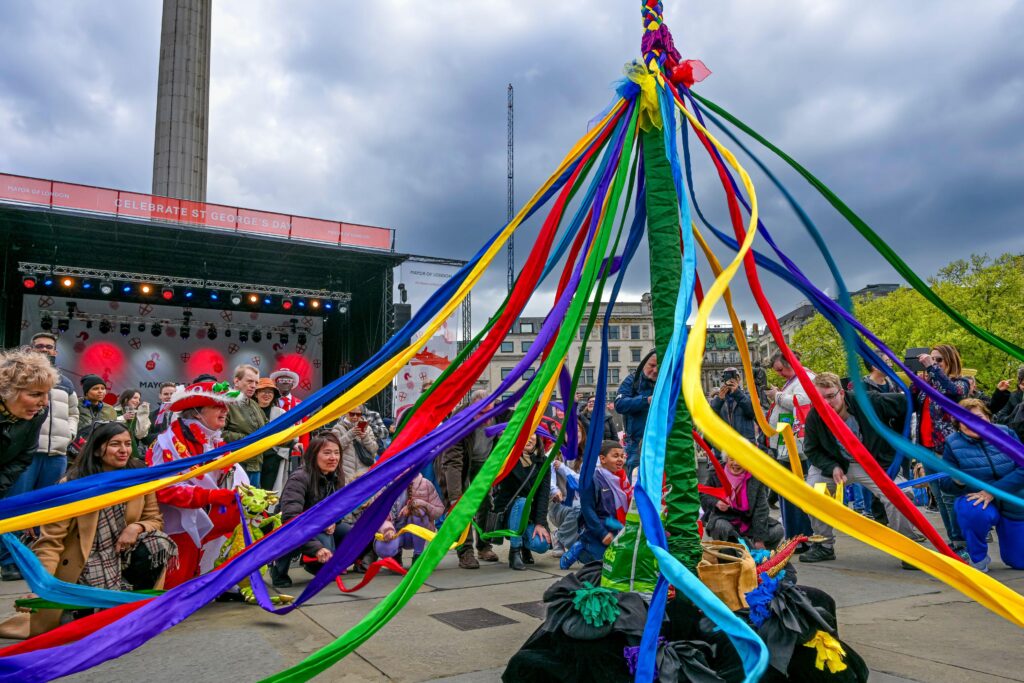
Finally, with spring in the air, who would be dancing around Labour’s maypole? (This being our May poll. OK never mind). “Universal Credit people. People on benefits;” “All the people who don’t work;” “All the people that we’ve helped but who don’t help us.” Where would it be? “Tower Hamlets;” “In a pothole in Pudsey. Or Manchester. They’re popular in Manchester for some reason.” What about the Tory maypole? “Down south. Chelsea;” “I don’t think it’s there anymore. It’s fallen down.” The Green party maypole? “At Stonehenge;” “Tree huggers and young hippies;” “They’re all on drugs;” “People in really wide-legged pants. Flowy skirts. Sandals when it’s raining.” And Reform’s maypole? “In a beer garden. Dancing around it with a cigarette and a pint;” “Nigel will be the pole. They’re all dancing around Nigel.”